EvoLite Design System
Role
————————
Project Manager
Design Director
Team
————————
Sr. Designer
CSS Developer
ADA
Legal Compliance
Supported 8 Teams
Timeline
———————
6 Months
Overview
As Prudential accelerated its digital transformation efforts, teams across the organization were building Salesforce experiences independently using a combination of out-of-the-box components and custom-developed solutions. Without shared standards, governance, or documentation, experiences became increasingly fragmented, creating inconsistencies for customers and inefficiencies for product teams.
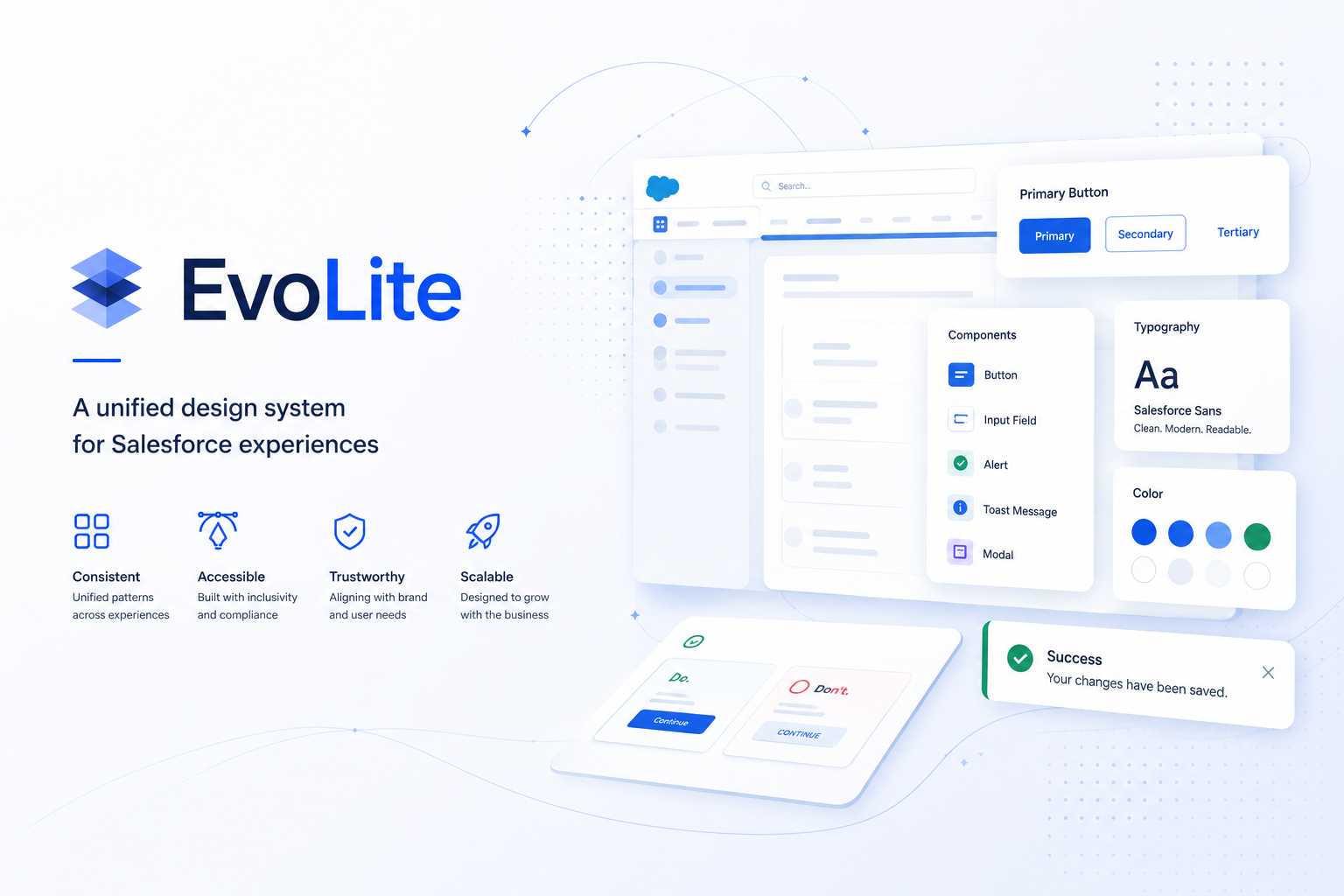
Recognizing the opportunity to improve scalability, strengthen brand alignment, and increase customer trust, I led the evolution of EvoLite—a Salesforce-focused design system initiative that established a unified foundation for digital experiences. The effort introduced governance, reusable patterns, and cross-functional collaboration processes that enabled teams to deliver more consistent, accessible, and scalable solutions across the enterprise.

Business Context
Prudential’s digital ecosystem spanned multiple platforms, technologies, and product teams, resulting in noticeable inconsistencies between React-based applications and Salesforce experiences. These variations impacted customer confidence, increased implementation complexity, and introduced unnecessary design and technical debt.
Partnering closely with Salesforce engineering leadership, I identified the strategic opportunity to align Salesforce experiences with Prudential’s broader enterprise design standards. By creating a more cohesive visual language and interaction model, the initiative helped strengthen brand consistency, improve customer trust, and establish a foundation for future digital growth.
Leadership Scope
As Design Manager and Design System Lead, I was responsible for defining and driving adoption of the EvoLite design system across Salesforce experiences.
Key responsibilities included:
• Overseeing the creatinatmon of documentation, implementation guidance, and best practices for design and engineering teams
• Establishing design standards, governance models, and reusable component frameworks
• Coaching designers, product owners, and engineers on design system principles and adoption strategies
• Developing scalable processes for reviewing and approving new custom components
• Partnering with Accessibility, UX Writing, Legal, Compliance, Product, and Engineering stakeholders to ensure enterprise-wide alignment
Beyond creating components, the initiative focused on building the operational structure necessary to scale design quality across multiple teams and business units.

Identifying the Opportunity
Shortly after joining Prudential, I was tasked with helping deliver a critical annuities transaction experience. During project onboarding, I asked a simple question:
“How does the customer get to this experience?”
The answer revealed a much larger organizational challenge.
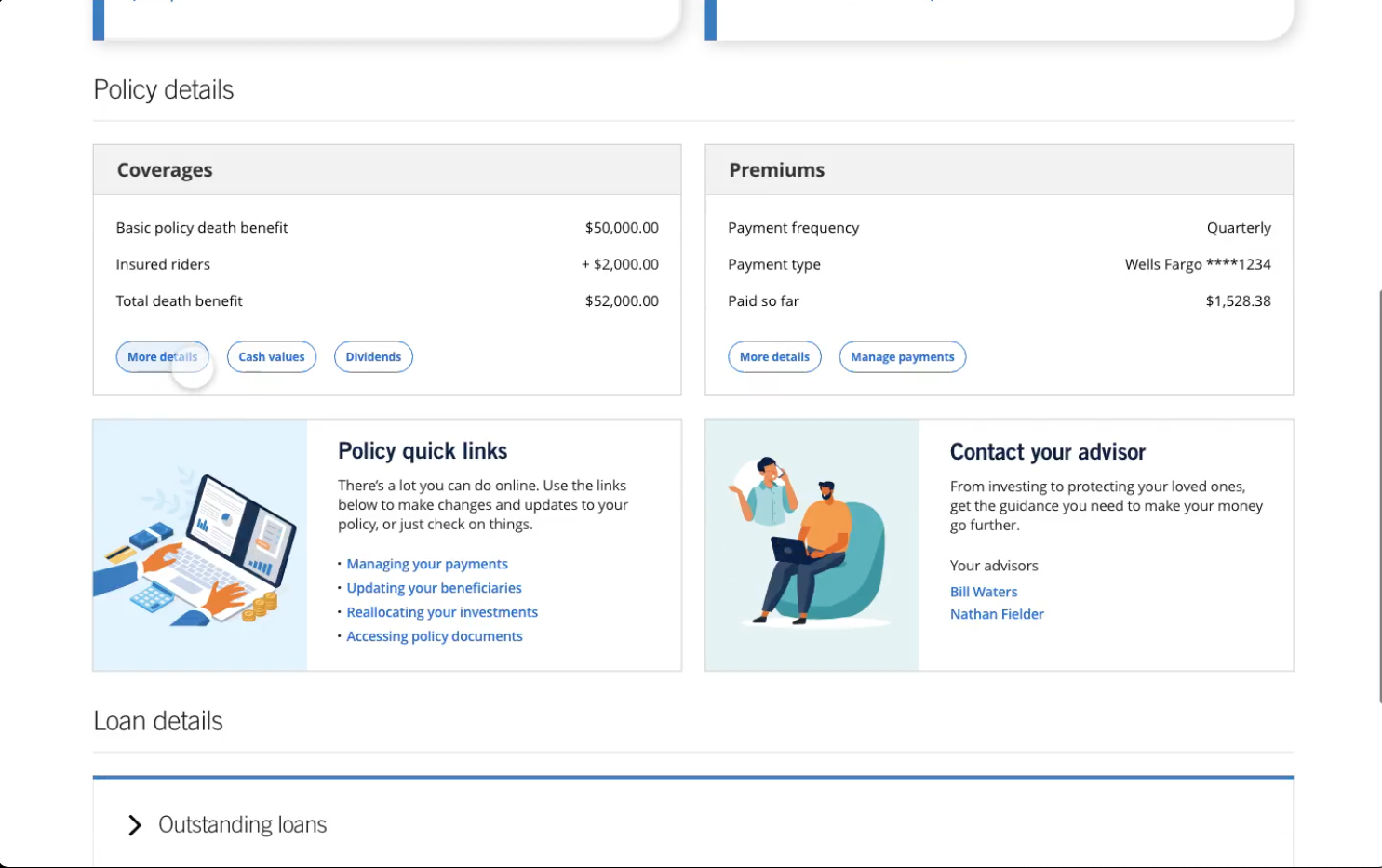
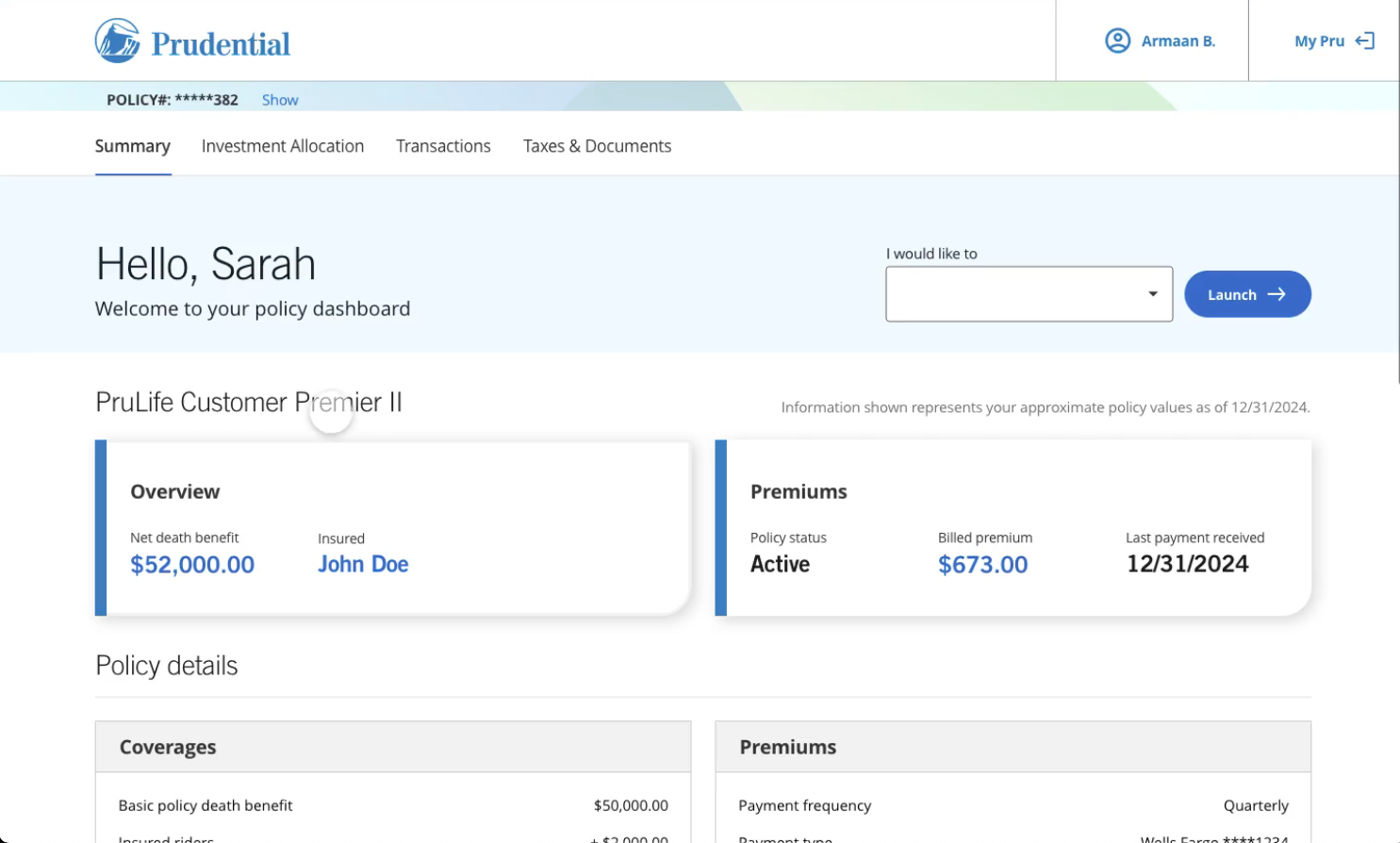
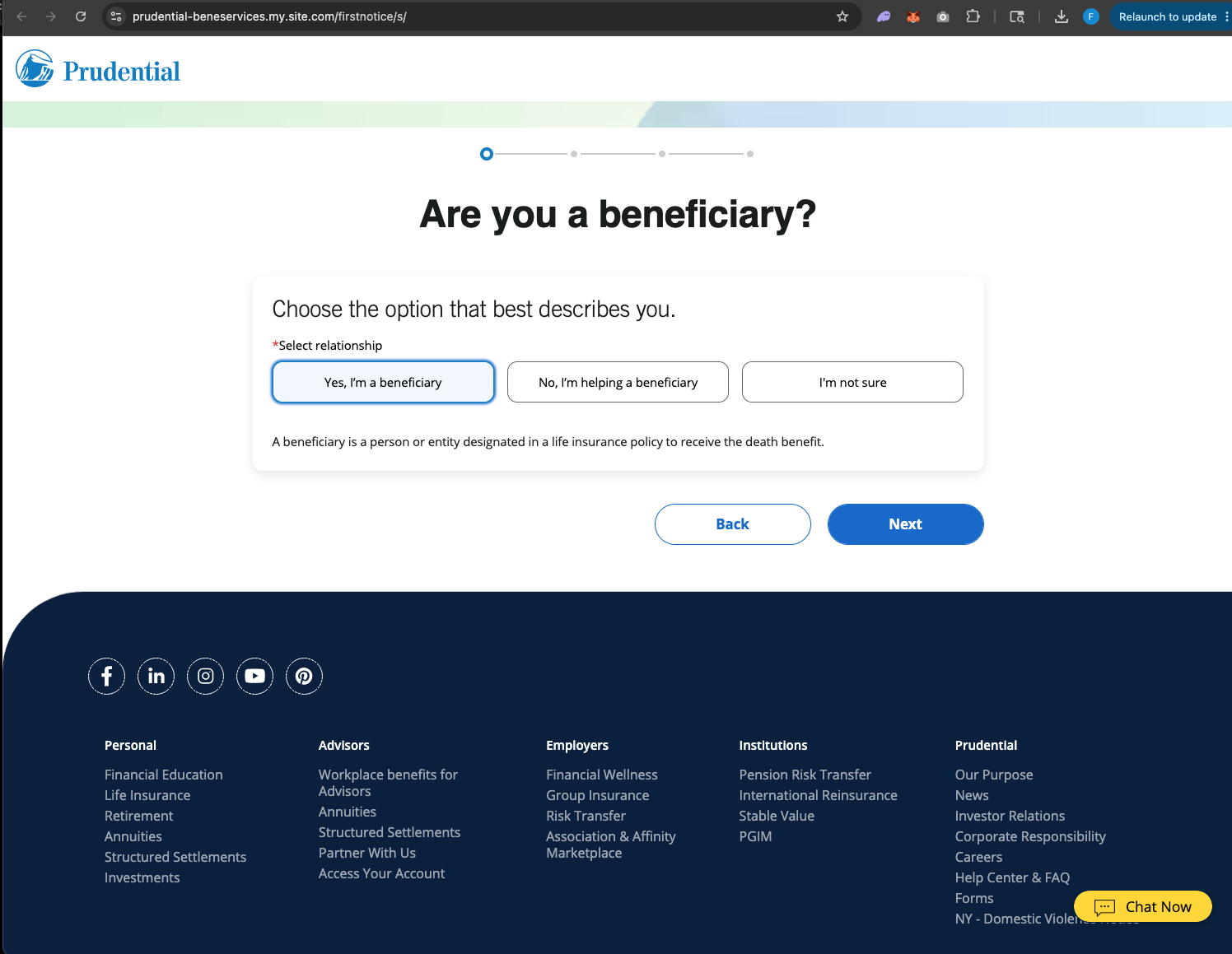
Customers began their journey within a React-based dashboard that followed Prudential’s evolving enterprise design standards. Upon launching a Salesforce transaction, however, they were immediately transitioned into a significantly different experience powered primarily by out-of-the-box Salesforce components.
Although both experiences technically adhered to brand guidelines, they differed in visual language, interaction patterns, navigation structures, component styling, and overall user experience. Customers were unknowingly moving between two design systems within a single journey.
This inconsistency created friction, weakened trust, and highlighted the need for a more unified approach to experience design across Prudential’s digital ecosystem.
Planning the Transformation
Rather than treating the issue as a visual refresh, I positioned it as a strategic design systems initiative.
Working alongside Salesforce engineering leadership, we conducted an audit of existing Salesforce experiences, component usage, and implementation patterns. The assessment uncovered significant duplication, inconsistent customization practices, and limited governance around new component creation.
Together, we developed a roadmap to evolve Salesforce experiences toward a shared design language that aligned more closely with Prudential’s enterprise standards while respecting Salesforce platform constraints.
The strategy focused on three core objectives:
Improve customer trust through greater visual and interaction consistency.
Increase delivery efficiency through reusable patterns and shared components.
Establish governance processes that would enable long-term scalability across teams.
Building the System
Transforming the Salesforce experience required more than updating components. Success depended on creating a sustainable framework that design, product, and engineering teams could confidently adopt and scale.
To support the initiative, I partnered with a Senior Salesforce Designer and a Salesforce development specialist to establish the foundations of the EvoLite Design System. Together, we created a repeatable process for component design, review, implementation, and adoption.
Weekly working sessions enabled rapid decision-making, issue resolution, and prioritization, while ongoing collaboration with Accessibility, UX Writing, Legal, Compliance, Product, and Engineering teams ensured that every pattern met both customer and enterprise requirements.
Many of the decisions that appear simple on the surface required extensive cross-functional alignment. Topics such as color contrast ratios, component states, data formatting standards, spacing, typography, button treatments, and corner radii were evaluated through the lens of usability, accessibility, compliance, and technical feasibility.
The result was a system that balanced customer experience, enterprise standards, and Salesforce platform constraints.

Documentation & Adoption
A design system only creates value when teams can easily understand and apply it.
While Prudential’s enterprise teams leveraged Storybook for documentation, Salesforce implementation constraints and project timelines required an alternative approach. To accelerate adoption, I led the creation of a centralized design system reference built in Adobe XD.
Designed to function like a website, the documentation experience included:
• Accessibility (ADA) considerations
• Real-world examples and reference patterns
• Standardized interaction behaviors and visual specifications
• Interactive table of contents with rapid navigation between components
• Best practices and implementation guidance
• Do’s and Don’ts for component usage
This approach provided designers, product teams, and developers with a single source of truth while significantly reducing onboarding and implementation friction.
Enabling Engineering
Adoption required more than design documentation.
Working closely with Salesforce engineering leadership and our CSS development team, we established implementation guidance that connected design decisions directly to Salesforce development practices.
Using Omniscript-based references and implementation examples, engineering teams gained a clear understanding of component usage, customization constraints, and code injection requirements when necessary.
This partnership ensured that design standards could be consistently translated into production experiences while reducing ambiguity during implementation.
Impact and Outcomes
01 — Reduced Custom Development
By establishing reusable patterns and documented standards, teams were able to leverage existing solutions more effectively and reduce unnecessary custom component creation.
02 — Improved Accessibility & Compliance Alignment
Accessibility, Legal, and Compliance stakeholders became integrated contributors to the design process, helping teams identify requirements earlier and reduce downstream rework.
03 — Empowered Teams to Make Better Decisions
Designers and Product Owners gained a framework for evaluating requests against established standards, creating more productive conversations around platform limitations, customer needs, and business priorities.
04 — Scalable Consistency Across Experiences
The introduction of governance, reusable components, and implementation guidance created a more consistent customer experience while improving operational efficiency across Salesforce initiatives.